
I hear a lot of myths about the use of smartphones and their impact on people’s lives. Most dangerous is the belief that screen time is the only metric that matters.
While screen time data is useful, people often overlook the bad phone habits they develop over time.
I take both seriously. Thanks to Digital Wellbeing tools, I’ve long been able to overcome screen time issues.
However, there was one particular phone habit that I wanted to change, but couldn’t due to no help from Android, unlike the screen time issue.
This is why Android 16 feels so special to me. This update not only introduces useful new features, but also impacts the way I use my phone. It finally changed a habit I struggled with for years.
To be more specific, Android 16’s buried notification button fixed my most frustrating phone habit. Here’s how.
Android 16 keeps reading my mind and I’m not mad about it
I didn’t tell my phone what I wanted, but somehow it knew
I have an unhealthy habit of checking every notification

Notifications are designed to distract you, but not all of them are worth your immediate attention.
I’ve known it for a long time, but reacting to every notification has become a reflex, forcing me to reach for my phone without a second thought.
This is the only reason I often leave my phone on silent mode, especially when working.
However, turning off the cellphone is not a complete solution, because it actually causes different problems.
I had to bear the consequences, because that was the only solution to prevent distractions when I needed to focus on something important.
When in general mode, even briefly, I feel compelled to check my phone every time someone sends me a lot of messages in a short period of time. So, silent mode didn’t improve my habits either.
Then came Android 16. It doesn’t silence all your notifications, but it reduces distractions by reducing the number of times you hear that familiar “ding” sound.
As time goes by, the Notification Cooldown feature in Android 16 makes me reach for my phone less often when notifications come in.
How Notification Cooldown helped me improve my habit of checking every notification

In my circle of family and friends, I haven’t met a single person who doesn’t complain about being distracted by too many notifications. The biggest culprit in most cases is WhatsApp group chats.
I can immediately understand it as I am facing the same problem, as I am currently a member of five WhatsApp groups. It’s annoying to hear the “ding” sound over and over again every time the group chat becomes active.
Turning on silent mode on my phone helped me drown out the noise, but I was constantly worried about missing important messages in those chats. It’s not easy to fight this and quickly return my focus to what I was doing before.
Notification Cooldown is designed to help you in such situations.
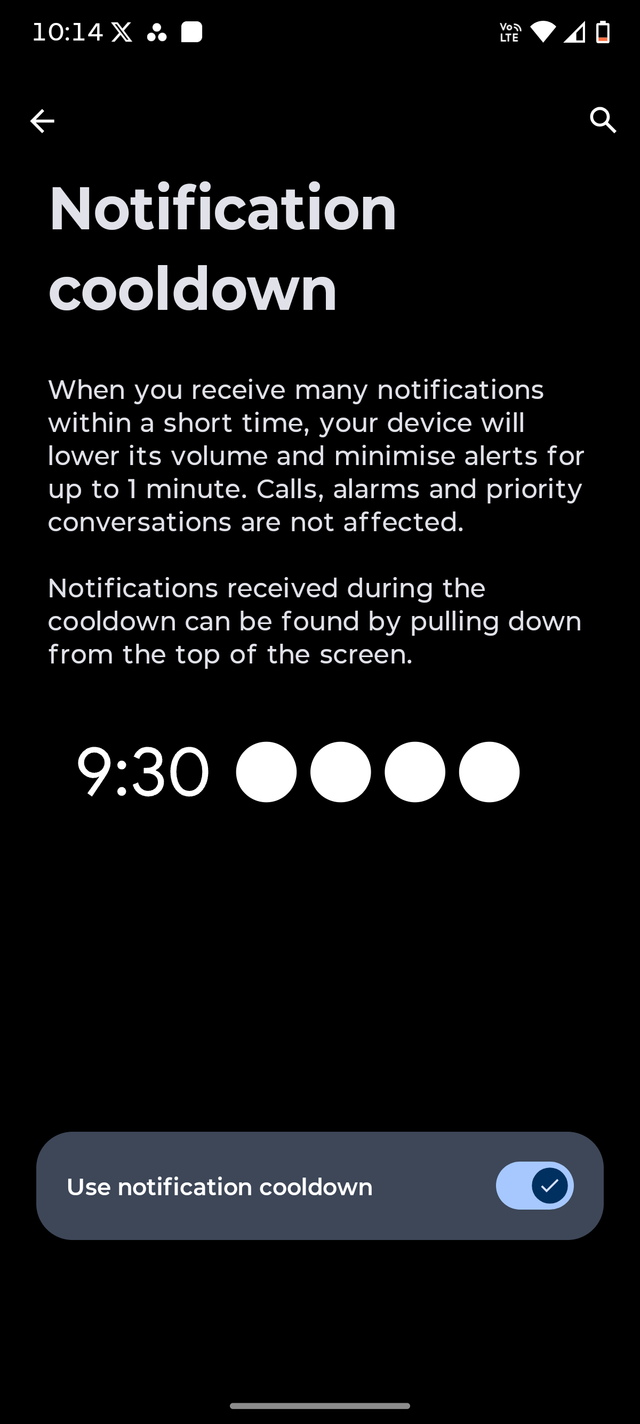
When your phone receives a barrage of notifications from one app in a short period of time, the Notification Cooldown feature will automatically activate to lower the notification volume and minimize on-screen pop-ups.
I kept my phone in Airplane mode for a few hours, and I can’t put into words how satisfying it felt when I realized how quiet my phone felt without a constant stream of notifications from the same apps.
That won’t make the notification go away. You can still access everything from the Notification shade.
However there are some exceptions. Notification Cooldown does not affect calls, alarms, priority conversations, and emergency alerts.
This is a necessary exception, and makes Notification Timeout sound like a carefully crafted feature that knows when not to act.
How to enable Notification Cooldown on Android 16
Google first teased the Notification Cooldown feature in Android 15, but to everyone’s surprise, the Mountain View tech giant did not add it to the final version of Android 15.
This is clearly not the end of Notification Cooldown, as Google added the functionality back to Android with the release of version 16.
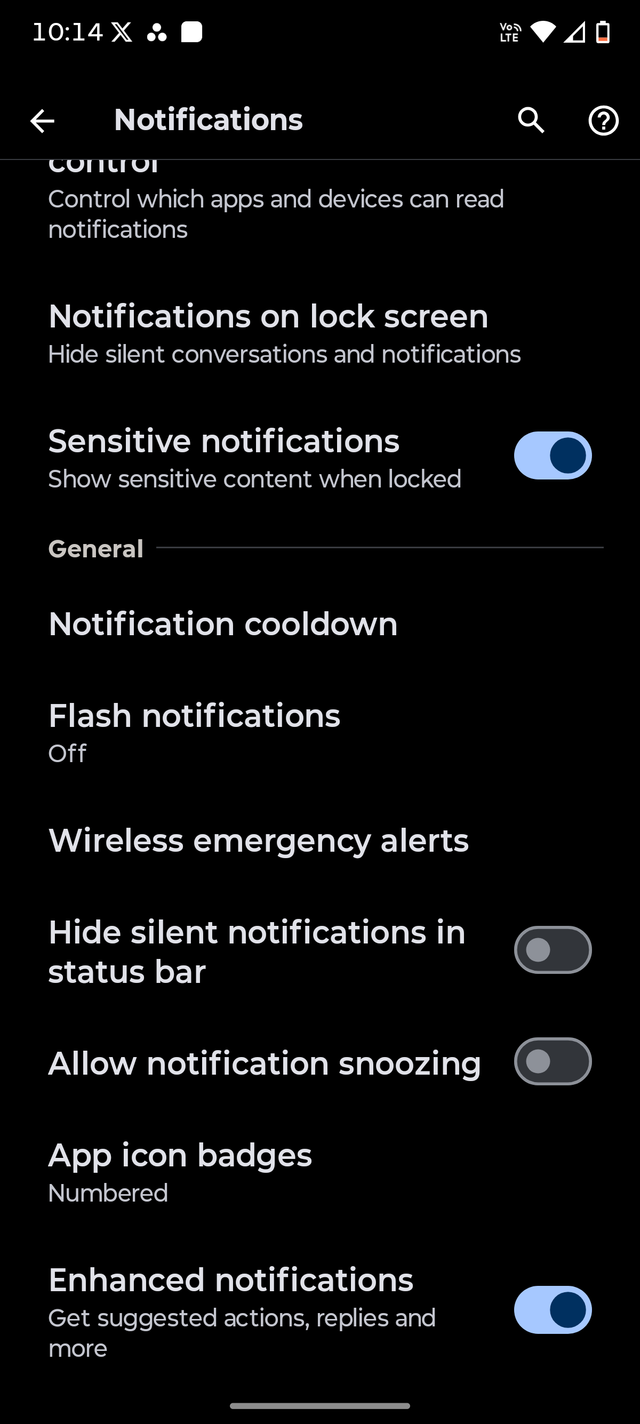
The Notification Cooldown option is hidden in the settings, but it’s not hard to find. Here’s how to enable it on phones running Android 16:
-
Open Arrangement application.
-
Knock Announcement.
-
Scroll down and tap Notification wait time choice.
-
Activate Use notification cooldown switch.
Just that. Your Android phone will now monitor incoming notifications and automatically reduce them when too many notifications come from the same source in a short period of time.
Notifications no longer determine when I pick up the phone
What I like about the Notification Cooldown option is that I barely notice it. This works behind the scenes to make me feel like a constant stream of notifications isn’t the default behavior.
The result is that I rarely reach for my phone reflexively. It doesn’t sound fancy on paper, but it’s helped me fix my most frustrating calling habits.
PakarPBN
A Private Blog Network (PBN) is a collection of websites that are controlled by a single individual or organization and used primarily to build backlinks to a “money site” in order to influence its ranking in search engines such as Google. The core idea behind a PBN is based on the importance of backlinks in Google’s ranking algorithm. Since Google views backlinks as signals of authority and trust, some website owners attempt to artificially create these signals through a controlled network of sites.
In a typical PBN setup, the owner acquires expired or aged domains that already have existing authority, backlinks, and history. These domains are rebuilt with new content and hosted separately, often using different IP addresses, hosting providers, themes, and ownership details to make them appear unrelated. Within the content published on these sites, links are strategically placed that point to the main website the owner wants to rank higher. By doing this, the owner attempts to pass link equity (also known as “link juice”) from the PBN sites to the target website.
The purpose of a PBN is to give the impression that the target website is naturally earning links from multiple independent sources. If done effectively, this can temporarily improve keyword rankings, increase organic visibility, and drive more traffic from search results.